The Future of Public Infrastructure in Wisconsin: Wastewater

The Future of Public Infrastructure in Wisconsin: Wastewater
Wisconsin’s Wastewater market is a dynamic sector of Public Infrastructure. It is driven by a unique set of challenges. These challenges are related to aging systems, environmental protection, and significant state and federal funding. For a Public Infrastructure salesperson, success in this market means getting ahead of the curve. This involves finding projects 1 to 5 years before an RFP is ever issued. During this time, you can become a trusted advisor. You can also educate the client on solutions and influence the project’s direction.
Wisconsin’s Wastewater Market: Key Drivers and Funding
Wisconsin’s wastewater infrastructure needs are defined by its dense population centers and a strong commitment to protecting its abundant lakes and rivers. The state is investing billions to modernize its systems and protect its vital waterways.
- Aging Infrastructure: Many of Wisconsin’s wastewater systems, particularly those built in the 1970s, are nearing the end of their 50-year design life. This has led to a surge in project demand. As a result, $216.5 million in eligible projects went unfunded in the 2023-2025 biennium.
- Environmental Protection: The state prioritizes protecting water quality. The Wisconsin Department of Natural Resources (DNR) drives change, pushing communities to reduce pollutants like phosphorus. Also, they address emerging contaminants such as PFAS.
- State and Federal Funding: The primary sources of funding are:
- Clean Water Fund Program (CWFP): This program is a joint effort between the Wisconsin DNR and the Department of Administration. It provides low-interest loans and principal forgiveness for a wide range of projects. Since 1991, the CWFP has provided over $6.1 billion in financial assistance. You can find information about the CWFP and its project lists on the Wisconsin DNR website.
- Bipartisan Infrastructure Law (BIL): The BIL gave Wisconsin’s CWFP an extra $900 million in federal funding. This money is for fiscal years 2022-2026. Some funds are for PFAS contamination in wastewater and stormwater systems, which creates a new market for specialized technologies.
- USDA Rural Development: The USDA’s Water & Waste Disposal Loan & Grant Program funds clean, reliable wastewater systems. It serves rural areas and towns under 10,000 people. Applications are accepted year-round.
Finding Future Projects with Early-Stage Sales Intelligence
In Wisconsin’s competitive market, waiting for an RFP is often too late. By the time a project is formally bid, the solution, technology, and even the preferred vendor may already be determined. Early-Stage Sales Intelligence is the key to winning. It means tracking public documents that signal a future project long before it’s officially announced.
- DNR’s Project Priority Lists and Intended Use Plans: The Wisconsin DNR publishes Project Priority Lists (PPLs) and Intended Use Plans (IUPs) for the CWFP. These documents list projects with a submitted notice of intent to apply for funding. This gives you a direct look into which communities are planning projects like plant upgrades, sewer system rehabilitation, and combined sewer overflow controls. Often, this is 1 to 5 years before an RFP is publicly released.
- Feasibility Studies: Many of these future projects start with a feasibility study or a “Sewer Service Area Plan” that must be approved by the DNR. Tracking these studies is a powerful signal of a project that is in its very early stages of development.
- Capital Improvement Plans (CIPs): Many Wisconsin municipalities and authorities publish multi-year CIPs. These documents outline planned spending on wastewater projects, providing a direct roadmap for upcoming work.
- Public Meeting Records: Local government meeting minutes and preliminary engineering studies often discuss infrastructure needs and proposed solutions. By tracking these documents, you can discover community challenges and engage with key decision-makers 1 to 5 years before an RFP is created.
How Citylitics Can Help
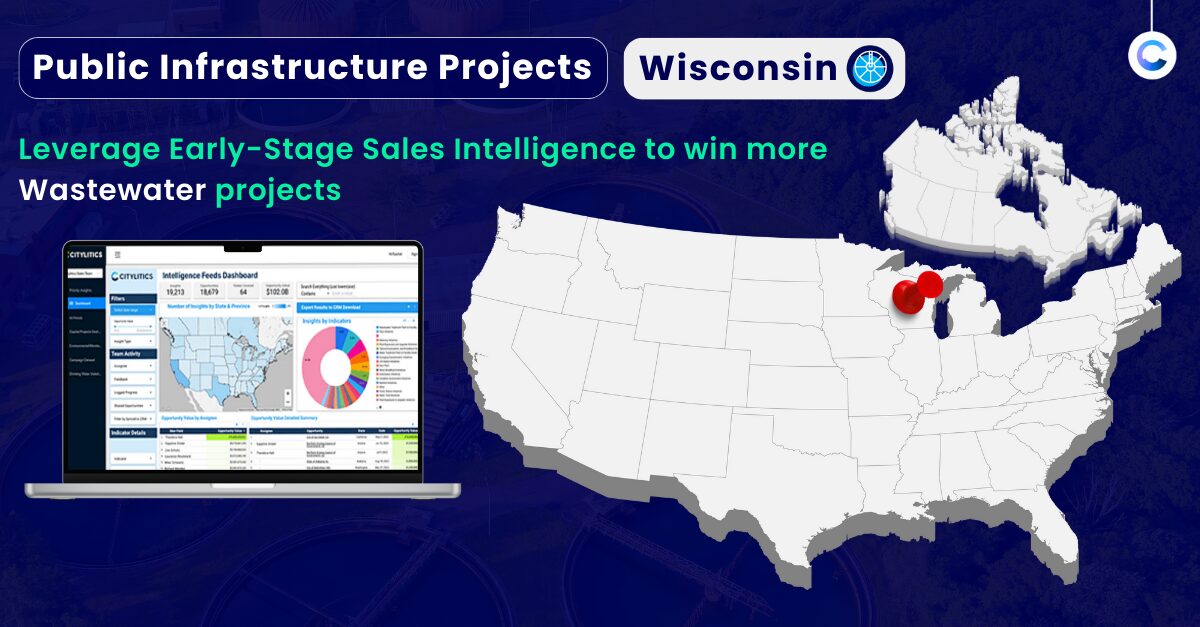
Citylitics transforms fragmented public data into actionable Early-Stage Sales Intelligence. We analyze millions of public documents from sources like the Wisconsin DNR, local municipalities, and utilities. Our platform provides a clear, forward-looking view of the Wastewater market.By using Citylitics, you can:
- Identify Planned Projects: Our platform tracks projects mentioned in CIPs, budgets, and public meeting minutes, giving you a comprehensive view of which communities are planning to invest in their wastewater infrastructure.
- Follow the Funding: We monitor funding applications for the CWFP and other programs to pinpoint which projects have secured financing and are most likely to move forward.
- Influence the Conversation: Find projects early. This allows you to engage with the right public officials. You can then become a trusted advisor, helping to shape the project’s scope and specifications. This will align with your company’s strengths and ultimately, this proactive approach significantly increases your chances of winning the project.
Learn how to uncover, target, and influence upcoming wastewater infrastructure projects. Request a demo of Citylitics today and start improving your win rates.